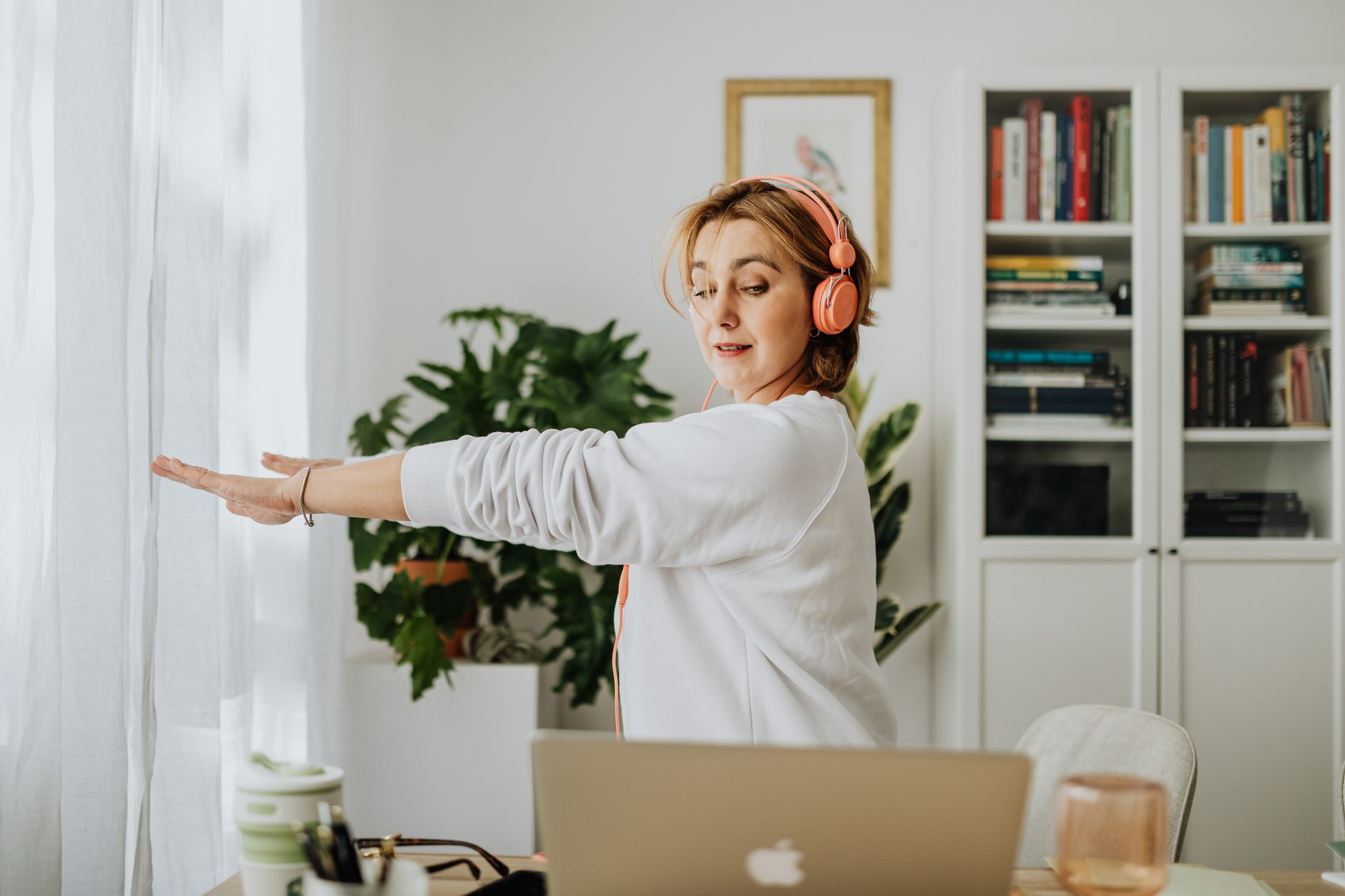
At-Home Wellness Tips from a Bucks County Chiropractor: Stretches, Posture Fixes, Sleep Positions & Desk Setups
*By Dr. Tony Gardner, Owner — Serving Morrisville, PA and Bucks County*
---
You don't have to be in pain to benefit from chiropractic wisdom. In fact, some of the most powerful things you can do for your spine, posture, and long-term health happen right at home — before any problem has a chance to take root.
As a chiropractor serving the Morrisville and greater Bucks County community, I see the same patterns over and over: people who sit at desks all day, sleep in awkward positions, and never stretch — and then wonder why their neck aches, their lower back tightens up, or their headaches won't quit.
The good news? A few simple daily habits can make a dramatic difference. I've put together this guide so you can bookmark it, share it with a family member, and actually use it. Let's get into it.
---
🧘 Section 1: Daily Stretches That Actually Help
You don't need a gym or special equipment. These stretches take less than 10 minutes and target the areas I see most commonly stressed in my patients.
1. Chin Tuck (Cervical Retraction) **Best for:** Neck pain, forward head posture, headaches
Sit or stand tall. Without tilting your head up or down, gently pull your chin straight back — like you're making a double chin. Hold for 5 seconds. Repeat 10 times.
> **Why it works:** Most of us carry our heads 2–3 inches forward of where they should be. For every inch of forward head posture, your neck muscles bear an extra 10 pounds of load. This simple move retrains that alignment.
---
2. Cat-Cow Stretch **Best for:** Lower back stiffness, spinal mobility, morning soreness
Get on all fours with your hands under your shoulders and knees under your hips. Inhale and let your belly drop toward the floor, lifting your head and tailbone (Cow). Exhale and round your spine toward the ceiling, tucking your chin and pelvis (Cat). Move slowly for 10 cycles.
> **Why it works:** This gentle motion lubricates the spinal joints, releases tension in the thoracic and lumbar spine, and wakes up the muscles that support your back.
---
3. Doorway Chest Opener **Best for:** Rounded shoulders, upper back tightness, posture correction
Stand in a doorway. Place your forearms on the door frame at 90 degrees. Step one foot forward and gently lean through the doorway until you feel a stretch across your chest and the front of your shoulders. Hold 20–30 seconds. Repeat 3 times.
> **Why it works:** Tight pectoral muscles are one of the leading causes of rounded shoulders. Opening them up gives your thoracic spine room to extend properly.
---
4. Supine Knee-to-Chest Stretch **Best for:** Lower back pain, sciatica, hip tightness
Lie on your back with both knees bent. Slowly pull one knee toward your chest with both hands. Hold 20–30 seconds, then switch. For extra relief, gently rock side to side while holding.
> **Why it works:** This stretch decompresses the lumbar spine and releases tension in the piriformis and hip flexors — common culprits in sciatic nerve irritation.
---
5. Seated Piriformis Stretch (Figure-Four) **Best for:** Sciatica, hip pain, glute tightness
Sit in a chair. Cross your right ankle over your left knee so your leg forms a figure-4. Sit up tall and gently lean forward at the hips until you feel a deep stretch in your right glute. Hold 30 seconds. Switch sides.
> **Why it works:** The piriformis muscle sits directly over the sciatic nerve. When it's tight, it can compress the nerve and send shooting pain down the leg. This is one of the most effective stretches I recommend to sciatica patients.
---
6. Thoracic Extension Over a Foam Roller **Best for:** Mid-back stiffness, posture, desk-related tension
Place a foam roller horizontally on the floor. Sit in front of it, then lean back so the roller is positioned in the middle of your upper back. Support your head with your hands. Gently extend over the roller, holding for 10–15 seconds. Scoot up or down to hit different segments.
> **Why it works:** This is one of the best tools for counteracting the effects of prolonged sitting. It mobilizes the thoracic spine and opens the chest — both of which tend to collapse during desk work.
---
🪑 Section 2: Posture Fixes You Can Start Today
Poor posture isn't just an aesthetic issue — it's a structural one. Sustained bad posture puts uneven stress on your discs, joints, and muscles, and over time it can lead to chronic pain, nerve irritation, and even degenerative changes in the spine.
Here's what I tell my Bucks County patients:
The "Wall Test" for Posture Stand with your back against a wall. Your heels, calves, shoulder blades, and the back of your head should all touch the wall with minimal effort. If your head doesn't reach, or your lower back has a significant gap, those are areas to work on.
Practice standing like this for 1–2 minutes a day. It trains your body to recognize what neutral posture actually feels like.
---
The 3 Most Common Posture Mistakes (and How to Fix Them)
**1. Forward Head Posture**
- *The problem:* Your ears are in front of your shoulders instead of directly over them.
- *The fix:* Practice chin tucks throughout the day. Set a phone alarm every hour as a reminder.
**2. Rounded Shoulders**
- *The problem:* Your shoulders roll forward and your chest caves in.
- *The fix:* Strengthen your mid-back (rows, band pull-aparts) and stretch your chest daily with the doorway stretch above.
**3. Anterior Pelvic Tilt**
- *The problem:* Your pelvis tips forward, exaggerating the curve in your lower back and causing your belly to protrude.
- *The fix:* Stretch your hip flexors and strengthen your glutes and core. The knee-to-chest stretch and bridges are great starting points.
---
🛏️ Section 3: The Best Sleep Positions for Your Spine
You spend roughly one-third of your life sleeping. How you position your body during those hours has a real impact on spinal health.
Best Position: Side Sleeping with a Pillow Between Your Knees Side sleeping is generally the most spine-friendly option. Place a firm pillow between your knees to keep your hips, pelvis, and spine in neutral alignment. Avoid curling into a tight fetal position — keep your spine relatively straight.
> **Pillow tip:** Your pillow should fill the space between your ear and shoulder so your neck stays neutral. If you're a side sleeper and your pillow is too flat or too thick, your neck will be angled all night.
---
Second Best: Back Sleeping with a Pillow Under Your Knees Back sleeping distributes body weight evenly and keeps the spine in a natural position. Place a pillow under your knees to reduce stress on the lumbar spine. Use a relatively flat pillow under your head — too much height pushes your neck into flexion.
---
What to Avoid: Stomach Sleeping Stomach sleeping forces your neck to rotate to one side for hours at a time and flattens the natural curve of your lower back. If you're a committed stomach sleeper, try transitioning gradually by using a body pillow to keep yourself from rolling fully onto your stomach.
> **If you wake up stiff:** Do 5 minutes of gentle movement before getting out of bed — cat-cow, knee-to-chest, and ankle circles. Don't go from lying flat to standing in one quick motion.
---
💻 Section 4: Ergonomic Desk Setup Tips
With so many Bucks County residents working from home or in office environments, desk ergonomics have become one of the biggest contributors to the neck pain, back pain, and headaches I treat every week.
Here's how to set up your workspace to protect your spine:
Monitor Height The top of your screen should be at or just slightly below eye level. If you're looking down at a laptop for hours, you're loading your cervical spine significantly. Use a laptop stand and an external keyboard, or invest in an external monitor.
---
Chair Height and Seat Depth - Your feet should be flat on the floor (or on a footrest). - Your knees should be at approximately 90 degrees. - There should be 2–3 finger-widths of space between the back of your knees and the edge of the seat. - Your lower back should be supported — use a lumbar support cushion if your chair doesn't provide it.
---
Keyboard and Mouse Placement Your elbows should be at roughly 90 degrees and close to your body. Your wrists should be neutral — not bent up or down. Keep your mouse close enough that you're not reaching forward or to the side.
---
The 20-20-20 Rule (for Eyes and Neck) Every 20 minutes, look at something 20 feet away for 20 seconds. While you're at it, do a chin tuck, roll your shoulders back, and take three deep breaths. This micro-break habit alone can significantly reduce end-of-day tension.
---
Stand Up More Sitting for prolonged periods compresses the lumbar discs and tightens the hip flexors. Aim to stand or walk for at least 5 minutes every hour. A standing desk or a desk converter can help if your job allows it — but even just walking to refill your water glass counts.
---
🏡 Bonus Tips: Small Daily Habits with Big Impact
- **Hydrate.** Your spinal discs are largely made of water. Staying hydrated helps maintain disc height and flexibility.
- **Wear supportive footwear.** Flip-flops and flat shoes with no arch support affect your entire kinetic chain — including your back.
- **Lift correctly.** Bend your knees, keep the load close to your body, and never twist while lifting.
- **Strengthen your core.** A strong core takes pressure off your spine. Even 10 minutes of core work a day — planks, dead bugs, bridges — makes a meaningful difference.
- **Breathe diaphragmatically.** Deep belly breathing activates your deep core muscles and reduces tension in your neck and shoulders.
---
When At-Home Tips Aren't Enough
These habits are powerful, but they're not a replacement for professional care when something is genuinely wrong. If you're experiencing:
- Persistent neck or back pain that doesn't improve with rest
- Shooting pain, numbness, or tingling down your arm or leg
- Headaches that are frequent or severe
- Pain following a car accident or sports injury
- Stiffness that significantly limits your daily activities
...then it's time to come in and get evaluated.
At my Morrisville practice, I take a thorough, patient-centered approach to understanding what's driving your symptoms — and I work with you to build a plan that includes both in-office care and the kind of at-home strategies outlined in this post.
---
Schedule an Appointment in Bucks County
I've been helping patients across Bucks County — from Morrisville and Fairless Hills to Levittown and beyond — live with less pain and more freedom of movement. Whether you're dealing with an acute injury or just want to stay ahead of problems before they start, I'm here to help.
👉 **[Request an appointment online](https://fairlesshillschiropractor.com/)** or call our Morrisville office today.
*Bookmark this page and share it with someone who could use a little spine TLC. Your future self will thank you.*
---
*Dr. Tony Gardner is a licensed chiropractor and owner of a chiropractic practice serving Morrisville, PA and Bucks County. This blog is for informational purposes only and does not constitute medical advice. Always consult a qualified healthcare provider before beginning any new exercise or wellness program.*
